Weird facts you can actually trust.
One strange, true thing a day. Every claim links to the primary source — click it and check for yourself. No vibes.
Get one strange fact a day
A weird, true thing in your inbox each morning — with the source, so you can check it yourself.
Signups open soon.
IBM's 350 RAMAC, the first hard disk drive, was introduced in 1956, weighed roughly one tonne, and stored 5 million characters — under 4 megabytes, less than a single photo from a modern phone — across 50 spinning platters each 24 inches across.
✓ checked
Canada has more lakes than any other country on Earth — over 2 million of them, more than any other single nation, though still fewer than all the rest of the world's countries put together — and Canada holds about 20 percent of the world's total fresh water.
✓ checked
Humans do not have only five senses; neuroscientists recognize at least nine distinct senses, including proprioception (body position), vestibular sense (balance), interoception (internal body state), nociception (pain), and thermoception (temperature), each served by dedicated receptors and neural pathways.
✓ checked
Octopuses have three hearts: two branchial hearts that pump deoxygenated blood through the gills, and one systemic heart that pumps oxygenated blood to the rest of the body — and the systemic heart stops beating entirely while the animal swims, which is why octopuses prefer crawling.
✓ checked
The first computer bug was an actual moth found trapped in a relay of the Harvard Mark II computer on September 9, 1947, and it was taped into the operators' logbook with the note 'First actual case of bug being found.'
✓ checked
In 1518, a dancing plague broke out in Strasbourg where roughly 400 people danced uncontrollably for days on end, with city authorities responding by hiring musicians and opening a guild hall to keep the dancers moving, believing more dancing would cure them.
✓ checked
A day on Venus (one full rotation on its axis) takes about 243 Earth days, which is longer than Venus's own year of about 225 Earth days, meaning a Venusian day is longer than a Venusian year.
✓ checked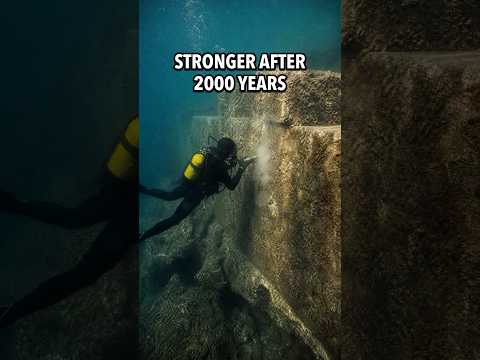
The ancient Romans used a concrete called opus caementicium that contained seawater and volcanic ash (pozzolana), and marine structures built with it have been found to be stronger after 2,000 years of seawater exposure than when they were first poured, because seawater triggers the continued growth of a rare mineral called tobermorite within the concrete.
✓ checked
The human liver can regenerate to its full original mass even after up to 70% of it has been surgically removed, with most regrowth within months and full recovery up to a year.
✓ checked
The wood frog (Rana sylvatica) survives being frozen solid for weeks each winter — its heart stops, its blood stops flowing, and up to 65% of its body water turns to ice — then it thaws and hops away in spring.
✓ checked
If you've ever messed with a crow, it will remember your face
✓ checked